The Crop Report: October 2026
If we think of urban life as a location where black folks learned to accept a mind/body split that made it possible to abuse the body, we can better understand the growth of nihilism and despair in the black psyche. And we can know that when we talk about healing that psyche we must also speak about restoring our connection to the natural world.
— bell hooks, "Touching the Earth"
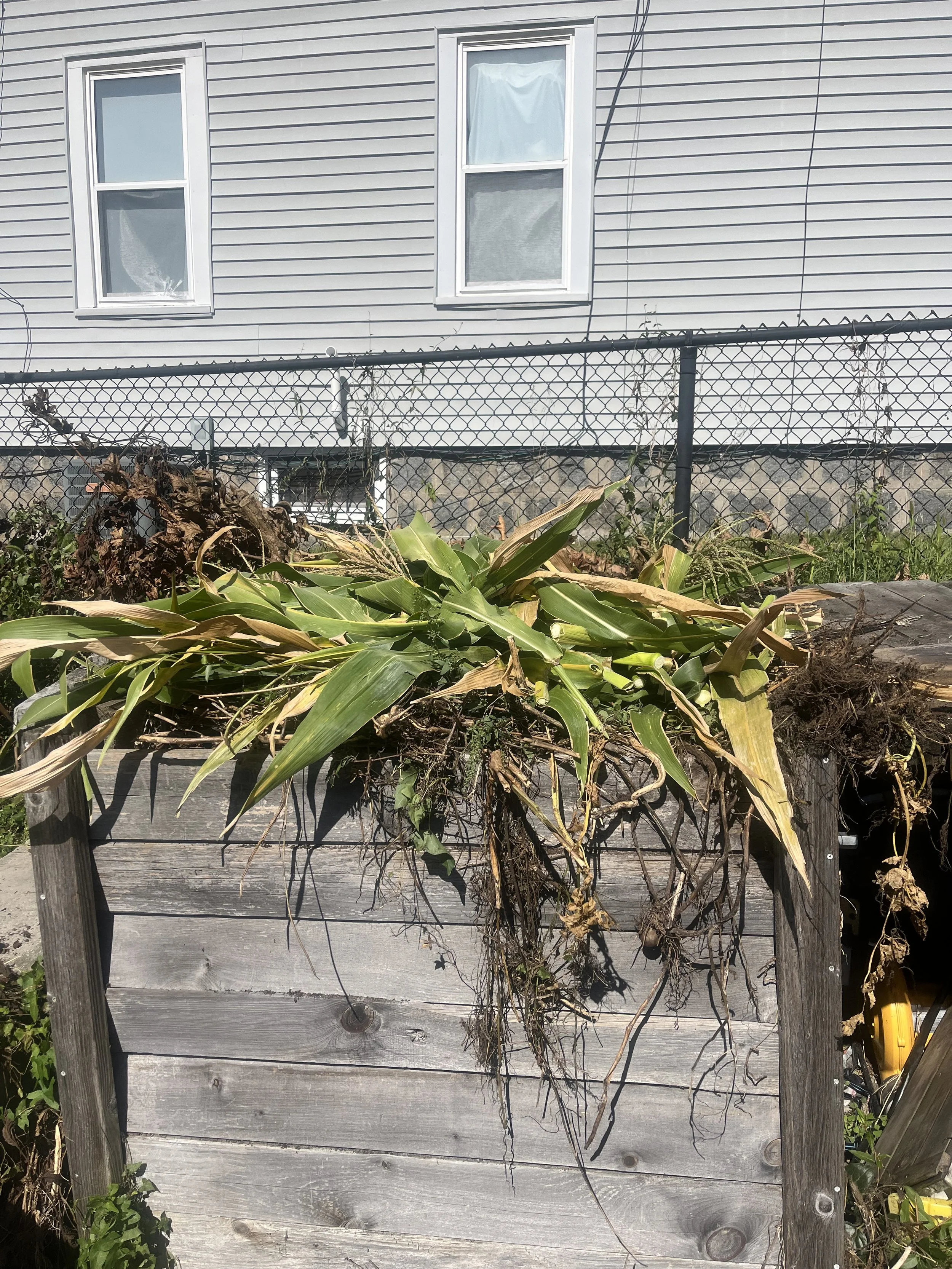
bell hooks made me rethink this compost pile
Returning to farming after a few years has changed the way I think about food. Not just what we grow or what we eat, but the systems of value that shape how we understand abundance, scarcity, productivity, and waste. What do we actually mean when we call something “waste”? Is waste a tomato that never makes it to farm stand because of its odd shape? Is it a bed of flowers planted strictly for pollinators? Is it the crop residue returned to the soil at the end of the season? Or is waste just a catch-all for anything that fails to generate profit?
Many of our ideas of waste emerge from a broader worldview that measures land, labor, and life according to output. Modern agriculture often encourages us to see fields as production units—resources to be managed and privatized. This way of thinking has a history. It is rooted in systems of extraction that separated people from the land, obscured the labor behind the production of goods, and normalized the dual exploitation of both natural landscapes and human communities.
bell hooks offers a different perspective in her essay, touching the earth. Reflecting on Black agrarian life, she describes a relationship to the land grounded not only in sustenance but also in beauty, wonder, reverence, and affirmation of life: “growing food to sustain life and flowers to please the soul.” I believe that our growers at the Urban Farming Institute see urban agriculture in a similar light: farming extends beyond the mere production of crops and becomes an invitation to understand the land as something with which we share a relationship of mutual responsibility.
In this month’s Crop Report, I invite readers to view farming as a practice of reciprocity and as a way of reclaiming our relationship with the natural world. In urban spaces especially, farming can challenge scarcity-driven thinking and help address the ecological and interpersonal harms shaped by systems of extraction. By reimagining what it means to touch the earth, we can begin to repair the distance between people and planet by witnessing cycles of growth, decay, and renewal and embodying intentional, life-honoring practices.
from relationship to resource
Once food production became increasingly distant from everyday life, it became easier to view food as a product rather than the outcome of countless relationships among soil, water, microbes, pollinators, weather, and human labor. Plantation agriculture treated both land and people as resources to be optimized for maximum output. Distinctive landscapes were simplified into monocultures designed to maximize the production of a single cash crop at the expense of ecological and communal well-being. Modern industrial agriculture often continues to obscure ecological interdependencies while hiding ecological and social costs, narrowing farmers’ choices, and reinforcing a system organized around uniformity and profit. Today, consumers encounter neatly arranged produce on grocery store shelves, far removed from the realities of the physical and ecological labor required to bring food to market.
This distance has impacted our understanding of scarcity and abundance. Despite living within food systems that are more than capable of producing extraordinary quantities of food, modern society often operates according to a scarcity mindset, measuring success through constant productivity while viewing anything that falls outside of market value as a loss. At our farm, we often ask whether waste is an inherent quality of a thing or simply a judgment shaped by the values we have been taught. Production staff regularly explore these questions with urban farmer trainees, inviting current and future growers to reconsider the assumption that production is the highest purpose of agriculture.
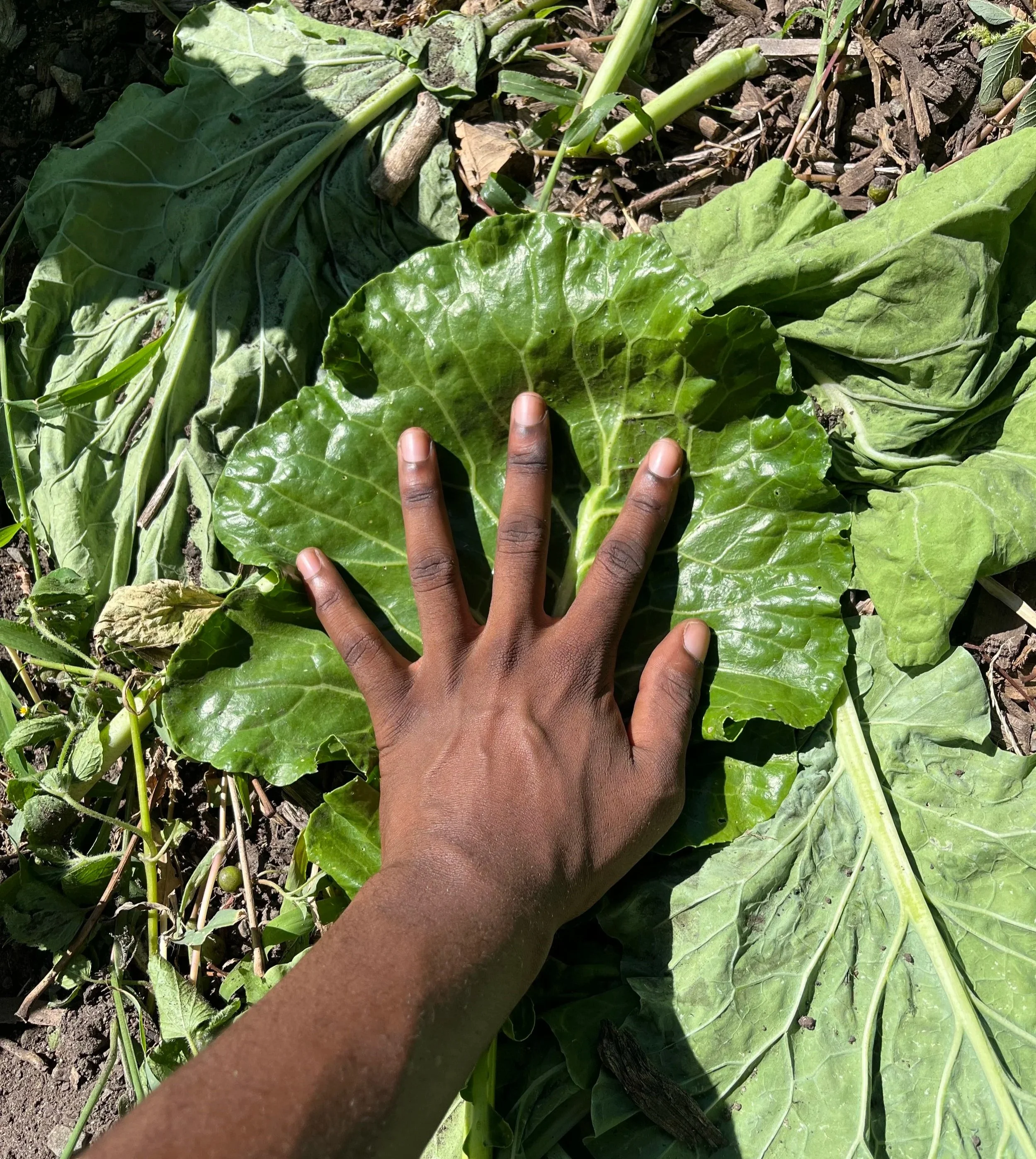
I mulled over this assumption often while helping prepare the farm for fall. For hours, I removed leaves from collards and cabbages and spread them across the garden pathways to return nutrients to the soil. Many of the leaves were curling, sunburned, bruised, or marked by insect feeding. Although I understood the purpose of the practice, I sometimes hesitated. Part of me worried that I was discarding food that could feed someone. Yet that hesitation revealed how deeply the logic of scarcity has shaped my thinking. The leaves were never being wasted; they were continuing their role within a larger cycle of nourishment. Our farms produce enough food to support both human and more-than-human communities. Nature rarely produces waste in the way industrial economies imagine it.
nothing grows alone
Farming has taught me that nothing exists in isolation. At its simplest, agriculture is the participation in an ongoing cycle of giving and receiving. At our farm, this perspective often appears in ways that are rarely measured by yield alone. Compost piles, flowering borders, cover crops, seed saving, and pollinator habitats may not generate immediate profits, but they strengthen the ecological dynamics that make future harvests possible. These practices challenge the assumption that value only exists in what can be harvested, consumed, or sold.
Seeing farming through the lens of reciprocity requires a broader understanding of wealth. Nature is a form of capital that humans rely on; however, the market price of a parcel of land does not always reflect the biodiversity, clean air and water, healthy soils, habitats, and community well-being it supports. If we are willing to rethink what we value, we may also need to rethink the role of money. What if money functioned as a means of reciprocity instead of a tool for extracting value? Investments in fair labor practices, ecological restoration, native planting, reforestation, and community stewardship opportunities all help renew the conditions that sustain life. In this framework, it is possible to view biodiversity, healthy ecosystems, and dignified labor as forms of wealth worthy of protection rather than commodification. We are not often encouraged to think beyond what the land can offer us. I implore us to question this line of thinking. What responsibilities accompany our dependence on the land?
Reciprocity begins with the recognition that every extraction creates an obligation, and that any taking without giving back leaves a debt owed to the living world. Our farm stand offers one example of this principle in practice. While our produce is often more expensive than food sold through commercial grocery chains, that price reflects investments in ecological care and human labor that industrial food systems often overlook. At the same time, accepting coupons and supplemental nutritional access program (SNAP) benefits helps ensure that fresh food still remains accessible to a broader range of households. In this way, our farm stand is an attempt to balance care for the land, care for workers, and care for the community.
please don’t call my compost trash
Food systems often encourage us to focus on the finished product while ignoring everything that precedes it. We celebrate abundance at harvest but rarely witness the crop failures, pest damage, decomposition, disease pressure, or the other countless uncertainties that accompany a growing season. Yet these “ugly” parts of farming are not failures of the system; they are part of the system itself.
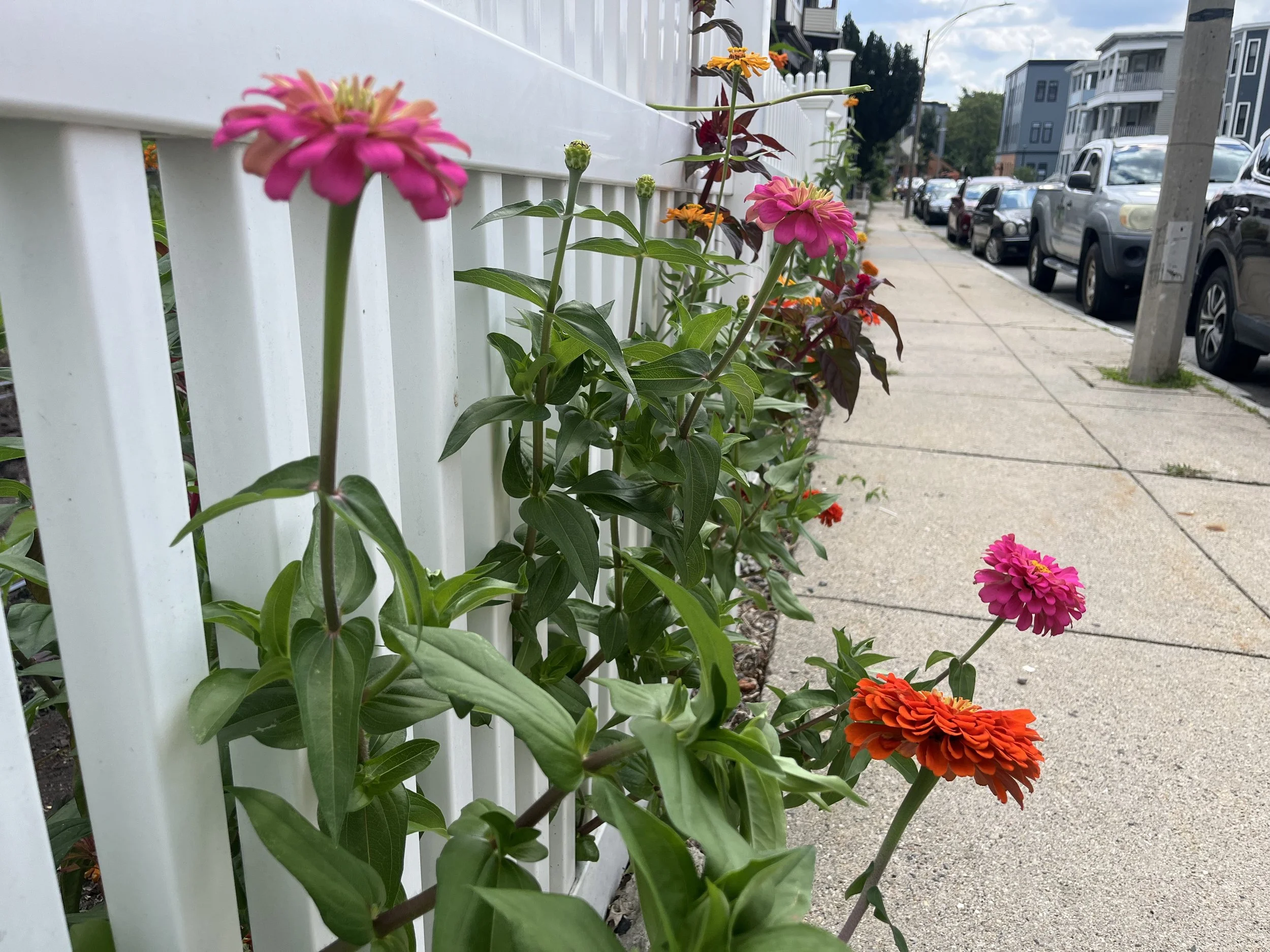
Beauty and utility are not opposing forces. In fact, our tendency to judge usefulness by appearance often mirrors the way we judge human worth. As bell hooks observes, there are systems in which “it did not matter if the body was well, only that it appeared well.” We carry similar assumptions into agriculture, where marketability is often mistaken for inherent value.
Compost offers a different lesson. Feeding crop residue into a compost pile might seem like a waste. It may appear to be little more than a mound of decaying leaves, stems, and trash that is ripe for a rodent infestation. On the other hand, decomposition is one of the most productive processes on the farm. Those discarded plants return nutrients to the soil. Recycling crop residuals support future harvests. Even weeds that emerge from a compost pile can teach us something about growing conditions.
If land is understood primarily as a resource, then waste simply becomes a technical problem to solve. When we view land as something with which we can have a relationship, waste becomes an opportunity to consider how value is assigned. Farming reminds us that value often lies beyond appearance, and that what we call waste may simply be life taking a different form.
touching the earth, again
bell hooks suggests that urban spaces can function as both sites of fracture and sites of repair. Modern life has drawn many of us away from direct relationship with the natural world, concentrating work, smart technology, and daily life indoors and online. At the same time, many urban landscapes bear the marks of historical and ongoing systems of extraction, exploitation, and dispossession. It is no surprise that communities shaped by these conditions may feel nihilistic and apathetic. Still, these same sites hold the potential for renewal.
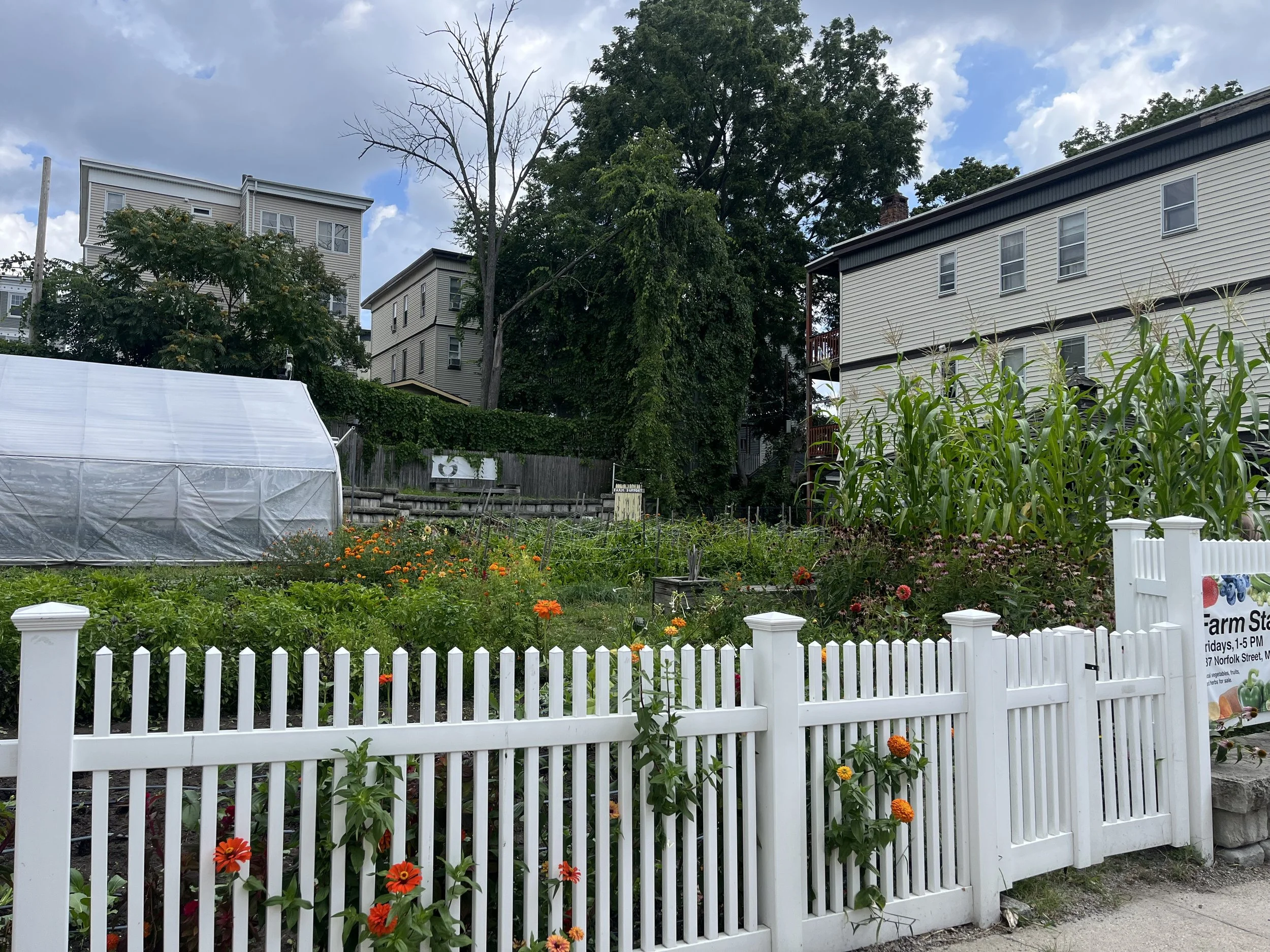
At our farms, that repair happens every day. Neighbors often stop staff to ask questions about their own gardens. Youth and adult educational programming teach trainees and volunteers how to understand a landscape. Pollinators return to spaces once dominated by concrete and asphalt. While urban agriculture cannot heal every wound, it creates opportunities to heal the rupture between people and place.
Now, I bite my tongue when I feel the word “waste” coming up. I am working to resist the impulse to reduce everything down to a calculation of cost and benefits. Just as humans have been commodified throughout history, I do not want to perpetuate the understanding that labor and land should be viewed through price. Both people and ecosystems possess forms of value that exceed what any market can measure. When we refuse to separate production from responsibility, we begin to understand that the health of a farm is inseparable from the health of the relationships that sustain it.
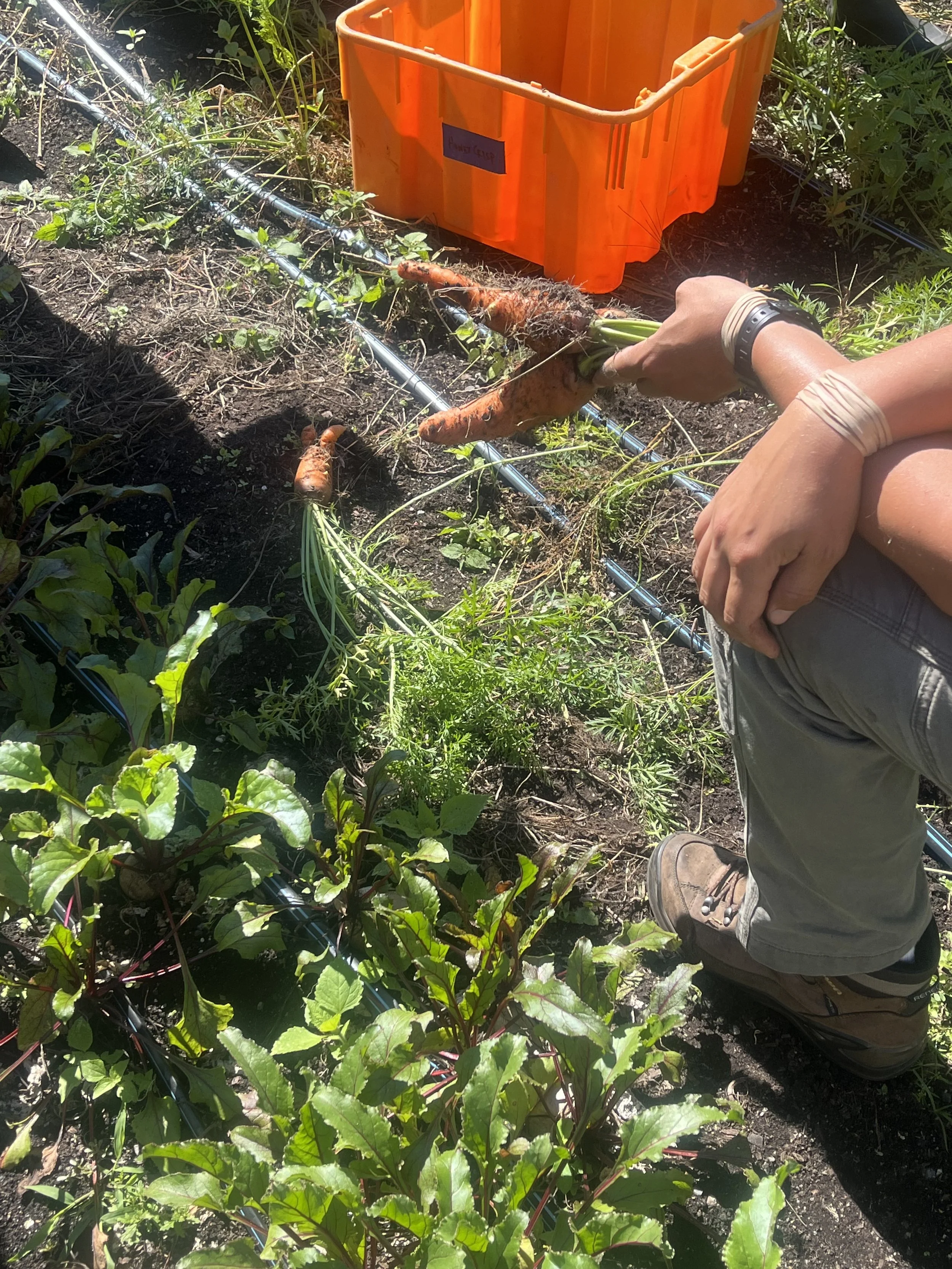
So, when a farmer asks you to toss watermelon rinds onto a compost pile, or strips leaves off a plant while discarding the vine, pause before calling it waste. Farming teaches us that value does not end when something ceases to be useful to us. A compost pile, a scraggly carrot, a pollinator bed, or a fallen leaf all continue participating in the work of sustaining life. Committing to a symbiotic practice of growing requires changing the stories we tell about value itself; we must learn to see worth beyond productivity, price, and perception. Only then can we begin to understand what makes a harvest truly meaningful.
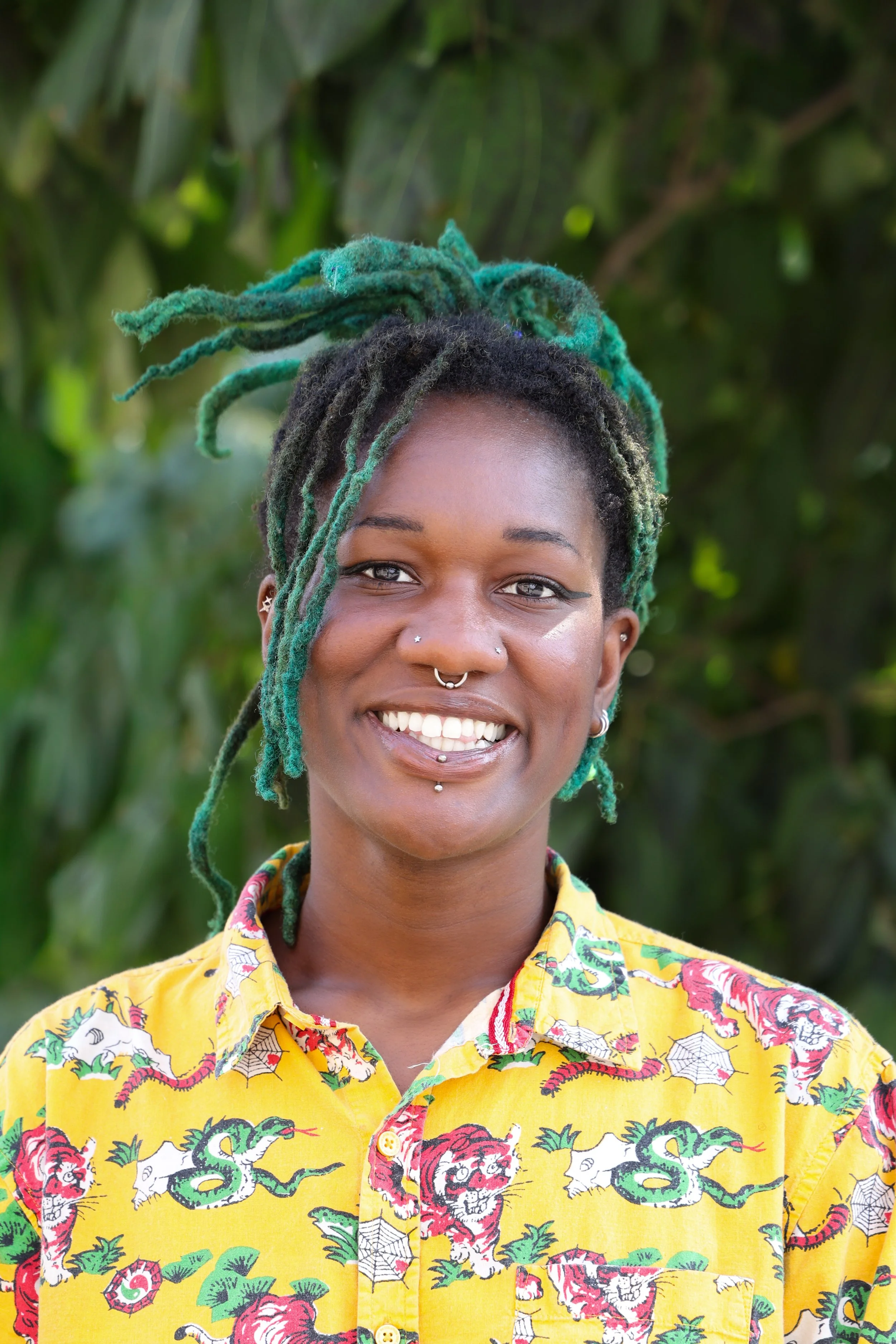
Tami Gordon is UFI’s Education Coordinator. A community-focused professional, Tami champions restorative justice, healing, and equity in their work, particularly around community organizing, youth engagement, culturally informed programming, and visual storytelling. Their vision of healing work relies on the integration of culture and nature–a tenet intrinsic to their Afro-Caribbean upbringing and sense of self–and activates spaces where those conversations and connections can be uplifted. Tami has a particular love for birding, plants as medicine, cultural empowerment, and earth-honoring spiritualities.